

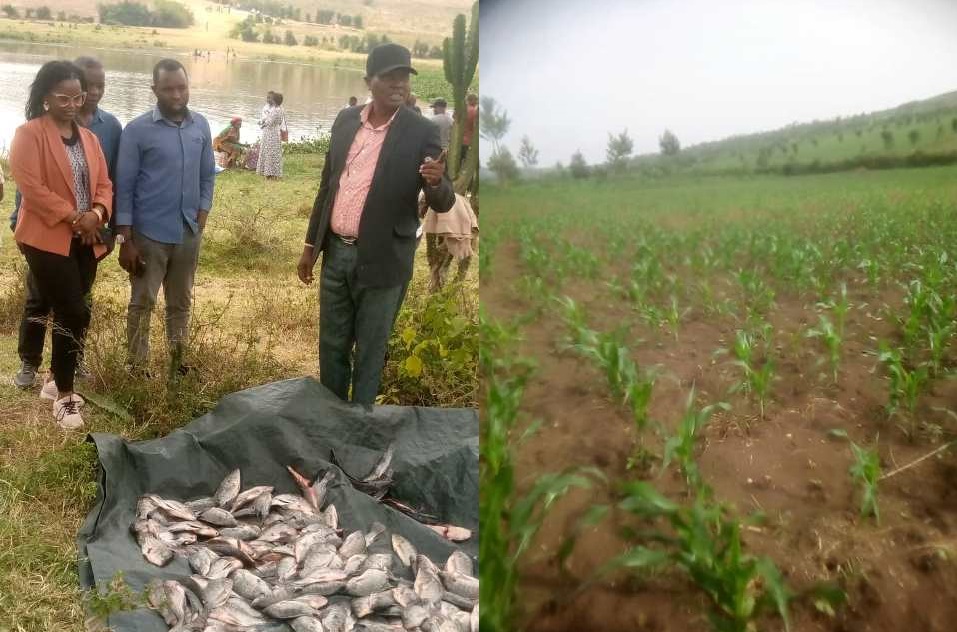
Residents from the sectors of Katabagemu, Karangazi and Rwimiyaga in Nyagatare District say the culture of joining saving and lending groups an approach introduced to them by the Rwanda Red Cross (CRR) is steadily lifting them out of poverty and empowering them to build sustainable livelihoods.
The initiative involves 200 vulnerable households selected under the Government’s Graduation programme, which targets families living in extreme poverty and supports them to become economically self-reliant. After being identified by local authorities, the beneficiaries were grouped into savings and lending associations with technical support from the Rwanda Red Cross.
Today, community members say the training and mentorship they received transformed their mindset, strengthened solidarity, and enabled them to create income generating projects that are reshaping their lives.
Muhawenimana Odette from Rwimiyaga Sector describes the shift as life changing: “We lived in extreme poverty. They trained us in modern farming and encouraged us to save and work in groups. Now everything has changed. We even learned that a small garden, when used well, can sustain a family. The Red Cross gave us confidence and courage.”
Espérance Nyiransabimana, leader of the Twiteze Imbere Twiyubaka group, says unity has become their biggest strength: “We are 23 members. We received training on hygiene and sanitation, and we’re now making bricks to build sheds for the small livestock we were promised. Our group account has 217,000 RWF, and members have borrowed more than 620,000 RWF. Working together has brought real progress.”
In Karangazi Sector, Julienne Nyirahakuzimana, secretary of the Tuzamurane group, says the association is now a pillar of support for all members: “We are 20 in the group. When someone faces a problem, we lend them money, which they return with 5% interest. Being brought together, trained, and learning to support one another has changed our lives significantly.”
Beyond the savings groups, the Rwanda Red Cross also financially supported five cooperatives selected based on their potential and readiness to grow.
Rodrigue Munyuza, who heads a fish farming cooperative, says the support gave them a strong foundation: “The Red Cross gave us 11 million RWF, which we used to set up four fishponds. We received training on how to grow and strengthen our activities. Now we are on a clear path to economic growth.”
Red Cross: Saving Groups Are the Foundation of Sustainable Community Progress
According to Bunane Alexandre, the Rwanda Red Cross Coordinator in Nyagatare District, the savings groups have proven to be a powerful model for transforming vulnerable families: “We formed eight saving and lending groups after the beneficiaries were selected and trained in agriculture and livestock in early July 2024. Each group has its own internal rules guiding saving, lending and proper management.”
He adds that the five cooperatives supported by CRR were chosen based on performance and potential for growth: “They are agriculture and livestock cooperatives that were still emerging and lacked funding. Each had at least 40 active members and demonstrated good management. The Red Cross intervened to help them boost productivity.”
Bunane emphasizes that the Red Cross does not choose the beneficiaries; local authorities do selecting the poorest households who also show willingness to work toward self-reliance, in line with national development programs.
He explains that saving groups are designed to evolve into stronger economic entities: “Saving together helps them solve daily challenges small investments, paying health insurance, and gaining awareness on health and environmental practices through volunteer facilitators. This enables groups to mature into cooperatives.”
Looking ahead, he notes that preparation is key as beneficiaries are set to receive small livestock: “They must prepare proper shelters for the animals. Good governance and following group rules prevents divisions and increases productivity. The goal is continuous income growth and improving community well-being.”
The impact is already visible: “For saving groups, the main result is improved living conditions and transitioning from basic groups into formal cooperatives. For cooperatives, it is increased production and adding value to their activities, which boosts members’ incomes.”
Residents are now calling for the program to be expanded, saying it has given them renewed hope, dignity and the ability to shape a better future for their families and communities.